Who's here

Wednesday, June 1, 2022

‘The Battle at Lake Changjin’ and China’s New View of War


‘The Battle at Lake Changjin’ and China’s New View of War

War was once viewed as a danger to the ruling party. Now it is perceived as a way to strengthen CCP’s position.
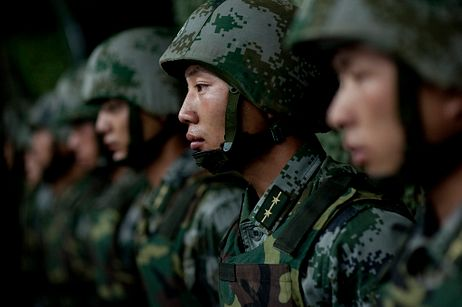


On China’s October 1 National Day holiday, while real-life People’s Liberation Army (PLA) fighter jets and other military planes sortied into the Taiwan Straits in record numbers, many Chinese celebrated by flocking to screenings of “The Battle at Lake Changjin,” breaking all box-office records. The 3-hour war epic commissioned by China’s propaganda department depicts a battle from the Korean War, where Chinese soldiers fought against the United States in what China calls the “War to Resist American Aggression and Aid Korea” (generally known abroad as the Korean War)

The film’s massive popularity arguably stems from China’s new view of war. Entering into military combat was formerly seen as a threat to the Communist Party’s hold on power.

China’s military was not in a position to win. Going to battle and losing Chinese lives, even if it resulted in a territorial gain, was seen as potentially provoking a level of domestic unrest that could undermine China’s leadership. With the potential to topple the ruling party, war was off the table. Now it is perceived as a way to strengthen the CCP’s position.

This new perspective on war is expressed not only by the very top and the elite levels of society but also by the people. It has led to a new breed of online influencers known as “military fanboys.” Another sign of the changing view is that going to war has become a common theme of China’s statebacked publications. According to the editor-in-chief of the state-sponsored Global Times, the Chinese people and their leaders believe that there is “no way that we can talk to the US with reason, we can only talk to the US with strength and actions.” This is a transformation in perspective that increases the possibility of war.

While the impetus for this change in perception can be debated, there is little doubt that the change has happened. The willingness to go to war is now portrayed as an expression of self-confidence and pride.

The timing of this new view of war might have been precipitated by the end of double-digit economic growth that had served as the foundation of the CCP’s pact with the Chinese people for almost 40 years. Notably, growth has consistently slowed over the past dozen years.

China’s new view on war could also be the next step in the decade-long process of regaining its self-esteem that began in earnest when China became the world’s second-largest economy in 2010. Prior to the 2008 financial crisis that began on Wall Street, China believed the West had many of the answers to prosperity. By 2010, the West still had not recovered and China was thriving with a huge budget surplus, leading Beijing to reconsider the best way forward for the Chinese nation.

Soon after Xi Jinping was appointed general secretary of the Communist Party and chairman of the Central Military Commission in 2012, he introduced “the Chinese Dream.” Based on the familiar term, the “American dream,” this concept of a better life was defined as “the goal of completing the building of a wealthy, powerful, democratic, civilized, and harmonious socialist modernized nation” by the 100th anniversary of the People’s Republic of China in 2049. Soon after, Xi linked the Chinese dream to “rejuvenation” as he declared: “Realizing the great rejuvenation of the Chinese nation is the greatest dream of modern China.”

Thus, the Chinese dream brought to the fore the long-promised “national rejuvenation” that would mark a full recovery from the 100 years of humiliation wrought on the Chinese people by Western powers, starting with the First Opium War in 1839. Reaching equal status to the world’s superpower by being able to stand up to U.S. military might would represent a major step in that long-hoped-for status of a proud nation returned to its historical position of global centrality.

Contributing to Xi’s ability to bring about national rejuvenation was the growth in his personal status within China. He slowly and conscientiously strengthened his position within the CCP. References to Xi as the “Great Helmsman” and the “Core” recognize his status as elevated above the former paramount leader, Deng Xiaoping, reaching the likes of Mao Zedong himself. Wielding a level of power arguably reaching that of Mao positioned Xi to bring about a transformation of both the Chinese people’s perception of war and China’s military capabilities.

Considering that China’s soldiers were all too young to have participated in battle, the idea of creating an army that would “fight to win” was not a given. It would require notable changes, such as Xi’s massive reorganization of the military that began in 2016. This included continued investment growth in military defense equipment. China’s 2021 defense budget, which was set at 1.36 trillion renminbi, represented a 6.8 percent increase from the 1.27 trillion RMB budget set in 2020, according to CSIS, a D.C.-based research institute. The new budget amounts to $209.16 billion at the current exchange rate. According to a 2020 report by the U.S. Department of Defense, the People’s Liberation Army Navy (PLAN) surpassed the United States Navy in total battle force ships, with 360 to America’s 297. In an analysis of the military implications of the recently inked AUKUS agreement, it is reported that China’s Huludao shipyard turns out a nuclear submarine every 15 months.

These statistics engender pride in the face of China’s historical memory of humiliation, contributing to the perception that going to war is no longer viewed negatively by the masses or the elites. Once seen as a fool’s errand, Chinese soldier fatalities, even in the face of territorial wins, were unacceptable. Now the opposite is true. Battling for territory is now a symbol of China’s strength and power. Whether due to a new economic normal or the next step in national rejuvenation, engaging in war will no longer undermine the authority of the Chinese Communist Party. Instead, it has the potential to strengthen its mandate as leader of the most populous nation in the world.

Perhaps that is why “The Battle at Lake Changjin,” depicting China defeating the United States against all odds in one of the major battles of the Korean War, has captured the imagination of a record-breaking number movie-goers. As the Global Times explains: “[T]he movie’s success shows the national feeling displayed in the film echoes the rising public sentiment in safeguarding national interests in front of provocations, which has great implications for today’s China-US competition.” That “rising public sentiment” could also have provided the motivation for the Communist Party to help produce and fund the film, to the tune of $200 million.

https://thediplomat.com/2021/10/the-battle-at-lake-changjin-and-chinas-new-view-of-war/

Tuesday, May 31, 2022

休息 1

 休 息

实薇的序

我至钦仰至敬爱的涵哥!

两年前的今日,正是一个英逸俊拔,极端反对自杀的青年,你,因为种种的压迫,愤激,悲哀,失望,病苦,以致不得不抛弃了一切而葬身于我们故乡潢水中的时候!光阴是如何地飞快呀!此刻,在这寒月黯淡寒风陡峭的凄清之夜,我闭目冥思mingsi a medita着,涵哥!你那和蔼静穆的面貌,你那明哲澈底的议论,你那滔滔倾泻的雄辩,你那刚毅狂热的精神,甚至你那我未曾目睹的悲壮的死!——都一一显

现在我底眼前,我不禁清泪横流了!

涵哥!我真愧对你!我们同学六载,爱若兄弟,关于你个人和家庭的一切,我都很详细地知道;在得到你底噩耗以后,我也曾发愿要写一篇激昂悲壮,淋漓尽致的小说,把你介绍给现代青年。哪知两年来萍踪浪迹并受了许多创伤的我,直到今年暑假才又来北京过这学生生活,中间既无多余闲暇,又恐没有文学天才,不能把你那伟大的人格表现出来,以致直到今天,已是你底两周年纪念日了,还未写出一字来!涵哥!亲爱的涵哥!你底薇弟是万分对不住你了呵!你原谅我吗?

今夜,从晚餐后到现在,我把你离校后给我的十一封信读了又读,心头充满了忆恋,愤闷,悲哀;我决计把它们拿去发表,让大家多认识认识这满布着魑魅魍魉chi1mei4wang3liang3 demoni si monstri (persoane rele) 的万恶社会,领略linglue a intelege领略你那坚苦卓绝大无畏的精神,使你底英魂永在。你那锋利的笔,写出你那烈焰lieyan4 valtoare 般的情感,怒涛nu4tao4 boala grava 般的血潮,必能使读者感受得更深切些。

你留给我的绝命书中说,“我只是要到那澄明静冷的清波里,休息休息我疲敝pi1bi4 (d. resurse) neadecvat 了的精神,调剂调剂我枯涸了的血液,润舒润舒我烧焦了的灵魂;——待我恢复了我原有的力时,再和这妖魔社会搏斗bo2dou4 a lupta!我是不会死去的哟!”涵哥!虽然你写那信时,神经想有些变态了,但你那无上的“力”,确切是永远活跃,永远不死,永远不会磨灭的哟!好!你底死并不是自杀,你是去休息休息,恢复你底力量。就用“休息”两字作你遗书的标题吧,你以为何如?

亲爱的涵哥!现在我执笔追忆着我们过去的友情,感到这满目荆棘jing1ji2 spini si maracini 的人生路上,失去了你这样一个勇敢英俊的爱友,我是如何地惨痛!满腹辛酸xin1suan4 amarat,叫我从何说起?两年来的薇弟,也没丝毫什么可告慰你的,不过对人心的鬼蜮gui3yu4 demon: tradator,社会的黑暗,更多更深了解些罢了。可使你听见喜欢的,便是我已从一个柔懦的书生变成个勇敢的人生战士了,——这也许是受了你的感化a reforma prin convingere

涵哥!以上的几句话,就当我今夜祭你的诔文吧!

实薇谨志于北京 一九二五,十二,二,夜深 

Sunday, May 29, 2022

The China Cables: Leak reveals the scale of Beijing's repressive control over Xinjiang

The China Cables: Leak reveals the scale of Beijing's repressive control over Xinjiang

Updated 28 Nov 2019, 2:31am

 这些文件告诉我们,这些澳大利亚公民是如何被从75名中国穆斯林少数民族人士中识别出来的,这75名穆斯林少数民族人士在大规模的监视中因为他们的护照而被筛选出来。

尽管不知道这些澳大利亚人的命运如何,但这份机密报告指示,公安人员驱逐或拘留那些“不能排除涉恐嫌疑”的外国护照持有人。

这批日期标注为2017年以来的文件属于中国政府的高度机密文件。国际调查记者同盟(ICIJ)获得了这些文件,并将之与澳大利亚广播公司新闻部(ABC News)和其他16个国际媒体合作伙伴共享。

这批被称为“中国电文”(China Cables)的文件为外界了解被称为反乌托邦的监视、拘留、再教育和强迫劳役提供了罕见的内幕,这些措施旨在同化及安抚新疆的穆斯林。

自2017年以来,该自治区超过100万名穆斯林少数民族成员被围捕并拘留在遍布中国西部地区的“职业培训”营地网络中。

大多数被拘留者来自新疆维吾尔族,这是一个人口超过一千万的突厥穆斯林少数民族,因激进分子制造的一系列恐袭事件而受到北京的集体惩罚。

奥尔西·贾泽希(Olsi Jazexhi)博士是一名加拿大-阿尔巴尼亚历史学家和伊斯兰学者,曾于今年八月应中国政府的邀请访问了新疆。他对西方媒体有关镇压的报道表示怀疑,并想亲自看看。

但是,在与吉尔吉斯斯坦接壤的阿克苏地区的一个示范营中,他的成见很快就被他所目睹的一切一扫而空。

“这个职业培训中心,或我们所说的集中营,是沙漠中的恶魔监狱,”他说。

他十分清楚自己所目睹的一切。

“目前中国人在新疆正在做的是……大规模的种族灭绝。”

洗脑程序

大多数文件都标有“机密”字样,这属于中国安全分类系统中的第二高等级,且与新疆庞大的被称为“教育培训”营地网络有关。

其中包括“每日要情通报”,对新疆隐秘的大规模监视官僚机构提供了前所未有的一瞥。

这些通报由中共新疆自治区党委发布,通报描述了一个称为“一体化作战平台”(IJOP)的全方位数据管理系统,该系统是新疆地区安全设施的核心。

人权观察组织(HRW)高级中国问题研究员王松莲(Maya Wang)说:“‘一体化作战平台’就是新疆大规模监视系统的中枢神经系统,如果你想这么说的话。”

“中国政府的目标是设计并建立一个完全服从并遵守其统治的社会。”

文件显示,“一体化作战平台”已成为少数派报告式的情报收集系统,令当局能够预测性地识别涉嫌持有极端主义观点和犯罪意图的人。

2017年6月25日发布的一个通告描述了“一体化作战平台”系统前一周如何在新疆南部地区侦查到约24,412名“可疑”人员。

在这些人中,有15,683人被送往“教育培训”,这是对拘留营的委婉说法,而706人被“刑事拘留”。

尽管没有明确提出怀疑的理由,但新疆警方2014年发布的通知列出了75个“宗教极端主义”的指标。其中包括:

  • 拥有指南针
  • 戒酒
  • 父母去世时哭泣、公开哀悼或以其他方式表现悲伤
  • 不让官员扫描你的虹膜
  • 告诉别人不要说脏话
  • 不让官员在你的床上睡觉、吃你的食物和住在你的家里
  • 与有以上任何一项行为者有关系

驻香港维吾尔民族主义研究学者侍建宇(Shih Chien Yu)说,持外国护照也是可疑的理由。

“北京相信他们对共产党和中国政府的力量没有足够的认识,”侍建宇说。

这就是为什么在另一个被泄露出来的通告中,“一体化作战平台”记录了涉及75名外国护照持有人中23名澳大利亚公民的情况。

根据阿德莱德的维吾尔维权人士努加尔·萨吾提(Nurgul Sawat)的说法,除了这23人之外,另有来自澳大利亚维吾尔社区的15名成年人和6名儿童被拘留在新疆。

一名澳大利亚外交和贸易部的发言人说,澳大利亚政府将继续对新疆的人权状况表示关切。 这位发言人表示:“我们将密切关注现有证据,并继续敦促中国为独立的国际观察人士提供有意义的入疆渠道。”

避免“外界的窥探”

这些文件还显示,2017年,时任新疆安全局长朱海仑负责监管再教育营体系。

朱海仑仍然是新疆维吾尔自治区人大常委会党组副书记,他被广泛认为是新疆省委书记陈全国的得力助手,而陈全国是这场镇压的策划者

朱海仑在2017年2月对安全人员的一次演讲中说:“我们要枪上膛、刀出鞘,拉响集结号,吹响冲锋号,构筑铜墙铁壁,布下天罗地网,以背水一战的决心、决战决胜的信心、战无不胜的雄心,让一切胆敢与人民为敌的暴恐分子粉身碎骨!”

这些话语,让人想起上周《纽约时报》发布的另一组泄露的中国政府文件中使用的字眼。

那些文件包括中国国家主席习近平的内部讲话记录,他敦促使用“专政机关”在处理新疆局势时“毫不留情”。

“中国电文”中一份最重要的文件是由新疆政法委签发、朱海仑亲自批准的长达九页的机密“电报”。

这标志着全世界首次看到中国政府内部的交流记录,透露出北京于2017年底是怎样计划管治新疆的再教育营体系,并将其从外界的窥探中隐藏起来的。

在一节被标为“严格保密”的内容中,该文件描述了所有工作人员遵守“政治和保密纪律”的必要性,下定决心避免逃逸,还提及如何利用秘密线人。

随后,它提醒主管们确保对日常活动的“行为规范和纪律要求”的遵守,例如早上起床、洗衣服、上厕所、吃饭、睡觉,甚至“关门”。

“...... 对学员实行就寝床位固定、队列位置固定、教室座位固定、技能操作岗位固定,严禁擅自调换。”

已经逃离的哈萨克族中国公民Sayragul Sauytbay现居瑞典。她说,在她于2018年被迫去教书的再教育营里,被关押的人只有两分钟时间如厕在一个塑料桶里。

根据该文件,当被拘留者到达营地时,他们被置于三个“管区”中的一个,类似于西方监狱的低、中或高级区域,他们被安排去哪个管区取决于“正常化”他们的行为所需要的再教育程度。

Men and women in matching outfits sit in a classroom.
在中国政府组织媒体的一趟新疆喀什之旅中,维吾尔男女在教室中学习。(Reuters: Ben Blanchard)

然后,营地中的管理人员会使用一个控制行为的打分系统,提供了评估“思想教育、学习培训、遵规守纪”的手段。

该文件指出,被拘留者在获释前必须满足六个条件,包括:

  • 在打分系统中获得高分
  • 完成被拘留一年
  • 曾被分配到安保级别最低的“管区”

科罗拉多大学(University of Colorado)专门研究维吾尔族事务的研究员达伦·比勒(Darren Byler)说:“中国政府现称之为职业技能培训中心,但这根本不是常规意义上的学校。”

“几乎每一所学校都使用带铁刺的网线或铁丝网。对这些学校的监控就像对监狱实行的监控那样。不允许里面的人离开。”

澳大利亚东突厥斯坦协会的亚当·图兰(Adam Turan)说,这场具有广泛性的镇压已经波及全球维吾尔人社区。他80岁的父亲在获释后不久即与世长辞。

“我们每个人都有家人、朋友、老师、学生或邻居被关在集中营里。”

被认为可疑的原因

“一体化作战平台”系统通过处理海量的新疆穆斯林信息,包括他们的地理位置、家庭关系,甚至他们使用的智能手机应用程序,提示当局认为反常的行为活动。

这些文件显示,北京在新疆的大规模监控行动的一个重点是将越来越多的个人信息数据输入“一体化作战平台”系统。而大量的人力维护也需要这么做。

地方当局被要求应对可疑信息,例如在接到“一体化作战平台”系统通知后,可“入家入户,逐人走访、询问、调查,彻底摸排”未进行实名注册的电话。

一份文件写道:“尤其是要将嫌疑人员的行为数据和关系数据结合起来,形成证据链,移送检察院和法院。”

人权观察(HRW)最近的一份报告反向设计了警方用来接入“一体化作战平台”系统的手机应用程序。

该报告的分析表明,官员们甚至被鼓励收集民众最普通的生活细节:用水、汽车登记和“经常避免从正门出入”等行为,这样“一体化作战平台”就可以辨识出任何行为上的偏差。

“一体化作战平台”是新疆监控网络的“中枢神经系统”。( ICIJ / Ricardo Weibezahn)

人权观察报告的作者王松莲告诉ABC新闻部,新疆的穆斯林少数民族并不总是知道哪些行为会被该系统提示。

“它的设想是实施...... [一个]全方位的传感系统,可以检测反常的行为,并先行防范反抗政府的问题或异议,”她说。

智能手机和通信应用程序是中共政权监控的焦点,甚至使用流行的文件共享应用程序也会引起当局危险的关注。

2017年6月29日发布的一份公告要求当局调查应用程序快牙(又称 Zapya)的用户,因为他们担心“带有暴力和恐怖特征”的内容在该平台上传播。

它揭示了“一体化作战平台”被用于“筛选和分析”,以辨识出使用快牙的190万名维吾尔人,它由中国邻动网络科技有限公司开发。

该公告将快牙分为几个显著的类别,例如,3,925名“未经授权的教长”,以及与离开中国的人有关联的用户,该公告还要求当局对这些人进行“逐一”审查。

如果当局不能排除他们的不当行为,嫌疑人将被置于“集中训练”中,这通常是对新疆再教育营的委婉称呼。

2017年的政府报告描述了一些快牙用户被捕的案例,很显然,原因是传播被中国政府称为带有极端主义或恐怖主义性质的视频。

尚不清楚中国当局如何知道哪些用户安装了这款应用,用户可以在手机没有联网的情况下使用该应用分享文件。

ABC新闻部获得的这些文件没有显示邻动网络科技有限公司与中国当局合作。该公司没有回复ABC新闻部的置评请求。

维吾尔人描述说,手机正在被当局仔细检查,有时还会被扫描据报道,该地区的一些游客被迫安装一个监控可疑内容的监控应用程序。

近年来,维吾尔人使用的流行中文应用和网站也成为多个恶意软件攻击的焦点

2017年,美国网络安全公司派拓网络(Palo Alto Networks)的研究人员在锁定包括快牙在内的几款中国应用后,发现了被称为Spydealer的安卓恶意软件。

埃迪斯科文大学(Edith Cowan University)恶意软件研究员彼得·汉内博士(Dr Peter Hannay)说,这款恶意软件的活动很大程度上类似于警方用来从智能手机中提取信息和呼叫历史的取证软件。

“我肯定会说,我们正在研究的是一个由资源充沛的机构制作出来的产品,”他补充道,“其目的就是监视。”

澳大利亚东突厥斯坦协会主席Nurmuhammad Majid和一些维吾尔人证实了这一观点,即微信等即时通讯平台在监控维吾尔人方面发挥了重要作用。

“所有这些流行的应用程序都在帮助政府收集我们的信息,”他说。

中国驻伦敦大使馆在回复一家“中国电文”合作机构的提问时断然否认拘留营的存在。

一名发言人重申了官方说法,即这些设施是“职业教育培训中心”,“受训者”在那里可以参加各种课程,并享有有保障的个人自由。

这位发言人说:“所谓的泄露文件纯属捏造和假新闻。”

[4 Corners report]

Read the story in English: 阅读英文版本


Wednesday, May 18, 2022

Red Terror in China - The Futian Incident

 江西時期的紅色恐怖

許行

●一般人談到毛澤東的紅色恐怖,多數只從延安時期的整風運動開始,張戎的《毛澤東鮮為人知的故事》一書與眾不同,它追溯到江西時期的反AB團運動和富田事變。


● 毛澤東在江西建立的蘇維埃政府是紅色恐怖政權。圖為 1934 年中共在瑞金召開的蘇維埃第二次大會。

何謂AB團?很久之前台灣研究中共黨史專家王健民曾訪問過AB團主要分子之一程天放,據程說,民國十六年(一九二七年)一月,國民革命軍已進駐南昌時,江西國民黨人段鍚朋、巫啟聖、洪軌、程天放等為團結黨員,抵制中共在國共合作中把持黨務,秘密組織AB團,A代表省級組織,B代表縣級組織。到了寧漢分裂,武漢國民政府下令改組江西省政府,任朱培德為主席,免掉一批國民黨忠貞分子,同年四月二日,共產黨搗毀國民黨江西省黨部,AB團也就隨之解體。所以AB團的壽命只有三個月。後來中共的「反AB團」,稱它為 Anti-Bolshevik (反布爾什維克) 的縮寫,全係捏造。(見王健民《中國共產黨史稿》第二編五二八頁)

毛澤東要殺的AB團不存在
另一位已故的中共問題專家鄭學稼說,AB團何時成立,沒有可引的資料,但他知道,一九二六年十二月底國民黨中央進駐南昌,派段鍚朋召開全省第三次代表大會,所選出的執委王鎮寰、周利生、程天放、段錫朋、王禮錫、劉伯倫、洪軌和監委姜伯彰、熊育錫、楊賡笙,都是AB團主角。而該團中的一位人士面告他,該團沒有嚴密組織,也沒有章程,只是人對人的鬆散連繫,A團為反共核心,B團為外圍,是同路人或群眾組織。南京政府成立,提倡「黨內無派,黨外無黨」,反對段錫朋的人攻擊段組織AB團,段辯解當時是奉命團結同志反共,實無組織,但國民黨人多不信段的話,後來程天放為了解除反對者的壓力,呈報南京中央黨部說,他們那時組織AB團,意為 Anti-Bolshevik ,現已解散。後來國民黨中央公佈程的呈文,於是AB團一般都作 Anti-Bolshevik 解。(見鄭學稼《中共富田事變真相》第二至四頁)

  同是程天放,兩處對AB團縮寫所含意義,各不相同。不過一九三三年十二月,AB團核心分子王禮錫在他所辦的《讀書雜誌》上發表日人佐藤貞一的一封信中附帶提到AB團時這麼說:「說到AB團,不過是前五年的一種政治組織,也不過是幾個人的一個小團體。所謂AB團者,原不過是兩重組織,並不是什麼的省寫,後來不久就解散了。」(見鄭學稼同上書第五頁)這與程天放對王健民所說的解釋一致。

  由此可以確定,原有的AB團壽命甚短,它早在一九二七年四月便已解散。毛澤東於一九三○年在江西所反的AB團,顯然不是原來的AB團,而且當時江西是否真有所謂AB團存在,也大成問題。鄭學稼在梳理了中共和國民黨的一些材料之後,得出這樣結論說:「我們知道:國民黨人組織的AB團,不是後來所說的 Anti-Bolshevik ,它只存在三個月的時間。毛澤東利用這個名稱,發動富田事變,張國燾也利用它,發動許繼慎派慘案。」(見鄭學稼同上書第八頁)

AB團造成紅色恐怖
張國燾殺許繼慎的慘案,發生在一九三一年十一月的鄂豫皖蘇區 。當時許任紅四軍第十一師師長。據現在新華網的資料說,許因反對張國燾遠離蘇區、冒險進攻的錯誤軍事方針被殺,而張國燾在他的《我的回憶》中專章敘述此事,說許身旁的吳參謀是國民黨奸細,因此被整肅。張沒有提到AB團罪名,只說吳參謀是國民黨改組派。但張承認當時軍中引起整肅風,被捕者約六百人,被整肅者百餘人,判死刑者約三十人。(見張國燾《我的回憶》第三冊第十六篇第六章)

  富田事變發生於一九三○年十二月初。富田是江西省吉安縣的一個大村莊,江西省行動委員會和紅軍第二十軍都駐在那裡。當時中共中央和蘇區之間,以及蘇區紅軍內部幾個頭頭之間的矛盾衝突甚為複雜。上海的中央想控制蘇區,成立「蘇區中央局」,由周恩來、項英、毛澤東等組成,周為書記,周在白區工作無法脫身,暫由項英代理,項與毛之間意見不和,毛與朱德、彭德懷、黃公略之間也衝突甚多,都因毛剛愎自用,大權獨攬,又因土改方針和軍事戰略分歧,引起軍中很多人對毛不滿,湘贛兩地的黨和軍中都有反毛情緒。

  一九三○年五月,毛由他所主持的總前委發動肅反運動,以反AB團之名清除異己。其酷刑逼供手段非常狠毒和殘暴,逼出的假供和亂供像雪球一樣,越滾越大,牽連之廣,在四萬紅軍中多達四千四百多人受害,造成可怕的紅色恐怖。

富田事變與毛的野心
毛根據逼供所得的消息,認定江西省行動委員會內有一個AB團省總團部,便派李韶九和古柏帶人前往富田捉拿,捕去省行委段良弼、李伯芳和紅二十軍政治部主任謝漢昌等,立即開始刑訊,邊審邊抓,抓了一百二十多人,處決了廿四人。紅二十軍一營政治部主任劉敵聞訊有人指他為AB團,大懼,為了自衛,率兵包圍省行委,將被捕的幾十人盡行釋放,又把部隊拉到贛江以西地區,派段良弼赴滬向中央控告,劉敵等提出的口號是:「打倒毛澤東,擁護朱、彭、黃」。

  富田事變發生後,毛澤東親自起草文件,以朱德、彭德懷、黃公略名義,發表《朱德、彭德懷、黃公略為富田事變宣言》(毛假借朱等名義一事,見郭華倫《中共史論》第二冊第二六九頁),指斥江西行委段良弼等和劉敵是富農地主共產黨員,企圖破壞土改,消滅蘇維埃,陰謀暴動,進而給富田事變定性為AB團反革命的總爆發,號召蘇區全體軍民實行階級決戰,消滅AB團。此一挾用他人名義的舉措,手段卑鄙,其目的在於對付「打倒毛澤東,擁護朱、彭、黃」囗號,封住朱彭黃反毛之口,製造朱彭黃與毛一致的假像,欺騙大眾。

  另一方面,事發後,逃亡的省行委致書朱、彭、黃、滕(代遠)求救,解釋被逼起事實情,並附有一封揭露毛想清除朱彭黃滕的密函。他們說無法取得此函原件,但記得內容,照抄原文,以頭顱擔保其真實。該密函是毛寫給古柏的指示。在該函中,毛要古柏在拷問段(良弼)、李(伯芳)、王(懷)時,「須特別注意勒令招出朱、彭、黃、滕係紅軍中AB團的主犯,並已與某方白軍接洽等罪狀,送來我處,以便早日捕殺。」(見王健民《中國共產黨史稿》第二編第五三二頁)。事後毛否認有此密函,而省行委也講明並非原件,故此事便成了歷史懸案。如果此函屬實,則可見毛之發動反AB運動,另有更大目的,即企圖消滅軍中最高層的異己勢力,獨攬大權。這種情形,在當時看來是不可能的事,但今天從毛澤東發動文革清除劉少奇和一大批老戰友的作為看來,毛當時有清除朱彭黃滕的野心,也不是不可能的事。

項英的安撫和毛澤東的倒算
一九三一年一月上旬抵蘇區的項英,以中央局代理書記身分處理富田事變。他進行調查並聽取雙方意見之後作出決定,認為「不能肯定富田事變是AB團取消派的暴動 ...... 富田事變是由黨內無原則派別糾紛演進而成的。」他不相信紅軍和共產黨內有這麼多AB團,因此認為清查AB團運動過了火,主張降溫,按照黨內矛盾以自我檢討和教育方式處理參與事變人員。

  在項英的調和下,參與富田事變的劉敵、謝漢昌、李伯芳等到黃陂參加中央局召開的會議,在會上做了自我檢討;紅二十軍被趕走的政委曾炳春,也在勸說下重新回到贛江以東。如果這批人真是AB團,在兵變之後早就逃到白區去了,怎還會回來作檢討的。富田事變中沒有一人叛逃白區,就足以證明並非反革命叛亂。

  遠處上海的中共中央,不僅無法真實瞭解蘇區情形,自身也正處於立三路線和國際派鬥爭之中。在得知富田事變之後,便決定由任弼時、王稼祥、顧作霖三人組成中央代表團赴蘇區全權處理。三人團於四月到達江西,事實上王明已於一九三一年一月在上海掌握了中央實權,開始清算李立三,所以對由李立三指派的項英正在打擊之列。故三人團在項與毛之間選擇了毛,支持毛對富田事變和反AB團的立場,報請中央,撤銷項英的代書記職位,由毛澤東接任。

  自此之後,李韶九在毛澤東授意下,加倍在贛西南進行清洗和屠殺,對紅二十軍進行報復,謝漢昌、劉敵、李伯芳等被殺,連沒有參加富田事變的紅二十軍前軍長劉鐵超、政委曾炳春,後任軍長蕭大鵬都被處決;整個紅二十軍全部繳械,副排級以上幹部全部被捕,絕大多數被處決,連許多兵士都無法倖免,整個二十軍被解散,虎口餘生的兵士被編入紅七軍。此時肅反範圍之廣,遠非富田事變前可比,真是達到血流漂杵,日月無光的境地。怪不得有人說,蔣介石所殺的共產黨,遠沒有共產黨自己殺自己那麼多。

  據維基百科說,富田事變後,各地反AB團運動被推上高潮,共有七萬多人先後被殺。

以運動殺人是毛一大「發明」
共產黨和毛澤東殺人的罪孽是數不清的。反AB團運動可以說是毛澤東以運動方式殺人的一個開端。此後,延安的整風運動,以及建國後的三反五反、反右、文革,連綿不絕,都是江西時期紅色恐怖的後續,一脈相承。以運動方式殺人,是毛澤東的一大「發明」,這不僅在中國是史無前例,在世界史上也是前所未有。

  中國五千年歷史,長期處於帝皇統治。諸侯爭霸,宮廷鬥爭,外戚宦官奸臣篡權,皇帝殺大臣,興文字之獄,株連禍結,史不絕書;又有國家分裂,異族入侵,農民叛亂,軍閥戰爭等等。殺人的方式不少,卻從未見過像毛澤東那樣以運動殺人的方式。

  追溯源頭,共產黨來自蘇俄,毛澤東有許多東西承襲斯大林統治,如黨專政、領袖崇拜、思想言論人身控制、秘密警察、集中營、秘密刑訊、蘇維埃、黨控壟斷經濟等等,都是效法蘇俄。但斯大林只有以清黨肅軍消滅異己,從來沒有像毛澤東那樣以運動方式消滅異己。從這個角度來說,毛澤東是「青出於藍而青於藍」,他比斯大林更斯大林。以中國語彙來說,就是殺人魔王,其兇殘遠遠超過秦始皇、明太祖、李闖王。真是看歷史風流人物,俱往矣,唯有毛魔王獨領禍國殃民、殺人如麻的風騷。

Saturday, May 7, 2022

K-英国情人 2

 遗书

一九三七年七月六日西班牙共和军发动布鲁奈特战役,以解救共和国首都马德里被围之险。好几个旅的国际纵队投入战斗,伤亡惨重。叛军有德国一百架飞机助战。救护车在公路上,目标暴露,虽然顶篷漆着巨大的红十字,一样被德国飞机追袭。中旬战事更紧,从前线撤下伤员越来越困难。

他已经几次躲过飞机追袭。

七月十八日清早,他又开了一辆刚修复的卡车改装的救护车上前方。返回的路上,他听到讨厌的德国飞机又在狼嗥般扑来。笔直的土路太窄,无法曲折前行,两边田野太暴露,已来不及撤下伤员。他只能大踩油门,拼命加速,仔细辨听飞机的狂吼声,在俯冲到底最后的一刹那,他突然狠踩刹车,自己一埋头俯身在座位上。随着刹车的尖叫,两颗炸弹落在汽车正前方,爆炸气浪几乎把车掀翻,弹片打烂了引擎。水箱破了,蒸气带着嘘叫乱喷。

飞机呼啦一声又拔高了。他爬出车座,抖落一身碎玻璃,骂了一句他所知道的最脏的话,瞧着飞机远扬。后面车厢的护士,虽然他警告过,还是撞得不轻,伤员更是狂声叫疼。此时,马德里正在召开世界作家反法西斯大会,纪念西班牙内战一周年,会议邀请他作为一个“前线的诗人”去演讲。他却觉得不必去参加文人激昂的空谈,前线也的确缺乏救护车司机。毕竟,在炸弹的呼啸中,行动,是最有力的诗句。

卡车没法开了,他只能等着后面一辆车接过伤员。回到医院,他立即换了一辆卡车开出去。

Friday, May 6, 2022

K-英国情人 1

天黑下来,仿佛已经过去了一百年,一千年。我心中的人,多少年来,你一次一次占有我的梦。你对我一遍一遍说这整个故事,这个故事永远没有结束,虽然你早被德国炸弹撕碎,而我消失在战争的烟雾之中。你像在提醒我:前世为一个情字,受了诸般tot felul苦,后世照样不可能逃脱a scapa:忘记是没有用的,因为梦不由我们做主。

是的,我一点一滴都未曾忘怀a uita,你眼睛的奇异neobisnuit亮光,一寸一寸照亮我绝望的漆黑。你站在那高而险的山崖上,像在等待什么,终于,天边出现了一道奇异的彩虹,你发现那就是我。是的,我想起来了,就是在那个神奇的时刻,你我识得了你我。

当年你来到神州古国,我们结伴而行,路过一个寺庙。当我们一同礼赞时,我感觉到,我一向狂嚣xiao zgomot不安的心,yan a inunda没在一片湖水般的宁静里。我向天发誓,永不忘记这一刻的灵光。直到今天,几辈子之后,我记忆犹新 you2 remember vividly。你呢,你是否还记得,哪怕你在某个人心里?

一切都怪我的心,因为我的心是空的,那么容易与你相融,好像水倒进水里。你正面双臂环抱着我,我全身覆盖着你,莲花环绕着我们。你是方法,我就是智慧;我是死亡,你就是刀刃。我们那天就明白,只有我们两者合一,才能给生命一个意义。于是我们在某一天,成为一本书的纸和字,无法剥离。好了,现在你可以跟随我的声音,跟着我的脚步,和我一起回到书页里,闭上眼睛,进入那美如天堂的情欲pofta, pasiune之境。

人们――熟知的人,陌生的人,愤怒不juan obosit 的人,拒绝听这故事的人――你们都得先抛开那曾经存在的一切记忆,比如年代,比如名字,比如地点:惟有我们共同拥有的这片心中的宁静,惟有guo a impacheta卷我们的时间长流,才是真实的。

几人有过这样的幸福?那年,我们竟然弄丢了年龄。

Thursday, April 28, 2022

Sovromuri - Advanced Romanian

 Pentru a intra in posesia despagubirilor de razboi datorate de Romania Rusiei Sovietice s-a semnat la 8 mai 1945 un acord economic intre cele doua state prin care se infiintau companiile mixte cu participatie romana si sovietica denumite sovromuri.

Statul roman si cel sovietic urmau sa investeasca fiecare o parte din capitalul necesar infiintarii acestor companii.

Domeniile vizate de aceste societati erau industria, agricultura, transporturile si sectorul bancar.

Rezultatele acestei colaborari urmau a fi impartite intre cele doua tari, ajutand economia romaneasca sa isi revina dupa cel de-al Doilea Razboi Mondial si in acelasi timp sa-si plateasca datoria de 300 de milioane de dolari.

Acordul nu s-a respectat, sovieticii preluand efectiv controlul asupra principalelor ramuri ale economiei. Ei au folosit drept capital utilaje capturate de la germani, pe care mai apoi statul roman a trebuit sa il rascumpere pe sume exagerate.

Specialistii trimisi de la Moscova au aservit economia Romaniei intereselor sovietice, facilitand transferul rapid si ieftin al unor importante parti ale resurselor tarii catre Uniunea Sovietica, in timp ce propaganda vremii punea accent pe relatiile de prietenie intre cele doua state.

O vina importanta o poarta si comunistii romani ai vremii care nu s-au opus infiintarii sovromurilor, in contextul in care foametea si seceta facea ravagii in 1946, valoarea monedei nationale era foarte scazuta si piata era lipsita de produse de baza, adaugand problemelor postbelice ale tarii.

Infiintarea sovromurilor

Pe 17 iulie 1945 a fost creat Sovrompetrol. In urmatorii ani a ajuns sa detina o treime din productia interna de titei restul apartinand companiilor de stat Muntenia si Moldova. La 1 septembrie 1950 si aceste companii au fost dizolvate si incluse in Sovrompetrol, intreaga industrie petroliera ajungand din acel moment sub controlul sovietic.

Pe 19 iulie s-a infiintat Sovromtransport care a intrat in posesia principalelor rute de navigatie si a porturilor Galati, Constanta, Braila si Giurgiu. Dupa aceea a aparut Sovromcarbune ce se ocupa de exploatarile miniere din Valea Jiului, Sovromtractor ce va deveni Tractorul Brasov Sovrommetal ce extragea minereul de fier de langa Resita, Sovromfilm ce era o unealta de propaganda prin importul de filme sovietice, Sovrombanc ce detinea monopolul bancar precum si alte zeci de societati ce vor fi infiintate in perioada 1945-1952.

Sovromcuart si bomba atomica sovietica

Sovromcuart s-a creat in 1952 fiind printre ultimele societati de acest tip. A furnizat 18.000 de tone de uraniu destinat proiectului Uniunii Sovietice de a isi dezvolta propria bomba atomica, aceeasi cantitate putand sa alimenteze reactoarele de la Cernavoda timp de un secol.

Muncitorii erau prizonieri politici si nu aveau nicio masura de protectie atunci cand manevrau materialele radioactive. Multi mureau din cauza iradierii. In locul lor erau adusi uneori localnici pentru a scoate uraniul din mine, dar care de multe ori nu cunosteau pericolul la care se expuneau. Principalele exploatari erau la Stei si Baita din judetul Bihor zone ce si in prezent sufera de pe urma reziduurile radioactive.

Sfarsitul companiilor mixte romano-sovietice

Din punct de vedere economic tara noastra a avut de suferit foarte mult din cauza acestor societati. Preturile marfurilor erau stabilite la nivelul anului 1938, iar 85 % din exporturile romanesti se indreptau spre Uniunea Sovietica, aceasta iesind foarte avantajata din acest schimb. In acelasi timp noi importam la pret intreg.

Reparatiile de razboi oficiale se ridicau la suma de de 300 de milioane de dolari, dar sovieticii au reusit sa scoata peste doua miliarde de dolari din participatia lor in sovromuri. Facand o comparatie, produsul intern brut al Romaniei in 1945 era de circa 500 de milioane de dolari.

Odata cu moartea lui Stalin conducerea Partidului Muncitoresc Roman a incercat sa puna capat acestei practici de drenaj a economiei romanesti. Initiativa comunistilor romani a fost aprobata de Hrusciov si in 1954 12 dintre cele mai importante sovromuri au fost preluate de statul roman urmand sa plateasca in schimb suma de noua miliarde de dolari.

Evaluarea romaneasca s-a ridicat doar la trei miliarde a capitalului sovietic investit in aceste societati si dupa discutii diplomatice indelungate suma s-a stabilit undeva la cinci miliarde.

Odata cu desfiintarea ultimului sovrom in 1956 cuplata cu retragerea armatei sovietice de pe teritoriul Romaniei doi ani mai tarziu se marcheaza indepartarea de controlul exercitat de Moscova asupra afacerilor interne ale statului roman si sfarsitul ocupatiei sovietice.

Romania and China – Friends with No Benefits


Romania and China – Friends with No Benefits

When it comes to the relations between Romania and China both parties refer to each other as being “old friends”, invoking a “traditional friendship” that ties the two nations separated by more than 8,000 km. Although Romania was one of the earliest countries to recognize the People’s Republic of China and the relations were close during the 1970s and the 1980s, with China being one of Romania’s strategic trading partners, the 1990s have been a period of mutual disengagement not only concerning Romania, but all the Central and Eastern European countries (hereafter referred as CEEC). Closer ties were reestablished starting with 1998 as China consolidated its position as an important player in the global economy, marking its new phase of development by entering the World Trade Organization in 2001, The CEEC were also in a process of reorientation, gaining security guarantees and new economic perspectives through their piecemeal European and Trans-Atlantic integration.

In 2012, China created the 16+1 format  that includes 11 EU members and 5 Balkan countries (Albania, Bosnia and Herzegovina, Bulgaria, Croatia, the Czech Republic, Estonia, Hungary, Latvia, Lithuania, Montenegro, Poland, Romania, Serbia, Slovakia, Slovenia, Macedonia) the purpose being that of intensifying and enlarging collaborations in areas such as transport, finance, science, education and culture. Potential priority areas for economic cooperation which Chinese representatives touted were infrastructure, advanced technologies and green technologies.

The 16+1 format is an important part of China’s foreign strategy in the context of the Belt and Road Initiative, the Member States being located at the Western end of China’s flagship international project and at the periphery of China’s largest trading partner, the EU. It is no wonder that the region is of interest for China not only for its peaceful and stable markets, but also for the high-skilled relatively cheap labor, open trade and investment environment. Numerous projects are being implemented in the region with funds coming mainly from the Chinese side (at the last 16+1 summit in Riga, Chinese Premier Li Keqiang formally launched a €10 billion investment fund to finance infrastructure and production capacity projects). Despite the fact that the 16 members were asked to contribute voluntarily in order to supplement the funds and are also asked to shoulder the capital contribution to projects like the AIIB in order to participate, the question on everyone’s mind is how they may profit the most from foreign capital and how that capital will be spent with regards to the long-term viability of the projects. 

Kind words 

As for Romania, in November 2013 it was the first country among the CEEC which Li Keqiang visited and the meeting concluded with a Joint Declaration on deepened bilateral cooperation. As stated in the Declaration, the relations between the two countries "are an example of inter-state relations in the current period" and the Chinese Premier reaffirmed in his speech given to the Romanian Parliament: “I believe that China-Romania cooperation may become a banner for China-CEEC cooperation and that China-CEEC cooperation will surely add new impetus to China-Europe relations”. The “may become” from the above phrase has proven so far to be not just justified cautiousness, but also unfulfilled expectations, as the Romanian authorities have proven to be inconsistent regarding their relations with China. The rhetoric behind the official visits portray a certain attachment of the Socialist-Democrats (the party forming the current majority in Parliament and which is a main source for the current Government) towards China and a more cautious approach from the Romanian President, whose background is liberal and explicitly Western European oriented. These types of asynchronies and asymmetries impede a proper development of the bilateral relations.

Despite the seemingly ideal momentum in the 2012-2015 period, none of the projects that were supposed to form the second wave of Chinese investments came to fruition. The “first wave” until 2010 consisted of small private investors laying the groundwork and probing the local potential, including for business friendliness, while the “second wave” is expected to be represented by significant investments from the large Chinese companies, mainly state owned, in infrastructure and energy. 

Talking money 

Currently, China is the 19th largest investor in Romania with the total investments amounting to USD 440 million in 2016. According to an ECFR report quoting Chinese researchers and data from the National Statistics Bureau of China, the investment of China in the region grew from USD 400 million in 2009 to 1.7 billion in 2014. 95% of this investment is focused on just 6 countries of the 16 – Bulgaria, Czech Republic, Hungary, Romania, Slovenia and Poland. Just five countries out of the 16 (the previous ones minus Bulgaria) account for 80% of China-CEEC trade (whose increasing trade deficit, of 34% is noteworthy in its own right). However, if we look at the investment data in the table below, we can see that Romania’s position is not commensurate with its size and the relative importance we ascribe to it in official communications.

From the table, we see that Romania received just over 11% of total Chinese investment in the CEE region, similar to Bulgaria, but 30% lower than the figure for the Czech Republic, almost half that of Poland and three times less than Hungary, despite the size disparity. While it is normal for countries starting from smaller bases to register high rates of growth in percentages, the rate of growth for Romania’s share of Chinese investment is actually much lower than its three main competitors, Poland and Hungary registering almost a quadrupling and a quintupling, respectively, of Chinese investment in the 2009-2014 period, as opposed to Romania’s doubling. What we may gather from these figures is that Romania has been less competitive than many of its regional peers with regards to attracting Chinese investment and some of it can be laid at the feet of the government itself.

The main Chinese investors in Romania in the last years are: Huawei, China Tobacco International Europe Company, Yuncheng Plate Making, Eurosport DHS and ZTE Romania. As of this year important investments are expected – Ningbo HuaXiang Electronic Co. Ltd. has announced an investment of USD 30 million in a factory that will produce automotive parts for Mercedes, and will begin operations by 2019. Another investment was made public and it targets the building of a luxury center in Băile Govara that will be built by Zhong Hua CTM Holding.

This year, China Energy Company Limited (CEFC) finished the discussions with the KMG International group (former Rompetrol Group) to take over the Petromidia refinery and 500 fuel stations from the Kazakh state company KazMunayGas. As of 2017, the Chinese company will pay USD 680 million and will invest at least USD 3 billion during the next five years, becoming the second largest player in the Romanian fuel market, after Petrom.

Finally, some of the longer-term projects touted by both countries regarding Chinese investment in Romania have yet to come to fruition: the memorandum of cooperation for the Cernavodă Nuclear Power Plant, the joint venture for the Rovinari Coal-Fired Power plant, as well as other projects including the Tarnița Hydropower Plant.

According to the Chinese Ambassador in Romania:

“China-Romania cooperation potential is far beyond the above-mentioned results. Bilateral trade volume has not reached the level of our aspiration and enthusiasm. No China-Romania key economic project has started its construction. No Chinese company has yet won tenders for Romanian infrastructure projects such as motorways and railways. Next step, both sides need to show more confidence, to tap the potential and seek appropriate methods, in order to push forward the mutual beneficial cooperation between China and Romania”. 

Dire conclusions 

As the rest of the CEEC develop extensive infrastructure projects with Chinese partners, Romania has yet to realize the potential of a partnership that can be translated from the rhetoric of official visits to real highways, railways and ports. The cautiousness of the Romanian officials, the ever-changing legislation, the excessive bureaucracy, the legislative instability including yearly changes fiscal policies that are not “foreign investor-friendly”, and above all the arguable lack of drive to make the projects become reality - these are all reasons which may induce China to shift its interest towards more “action oriented” countries.

Maybe it is time to look into our neighbor’s yard not just to see that the grass is greener, but to see how we can make ours the same or even better, and doing this with the help of an old friend is bound to make the process easier.


https://www.themarketforideas.com/romania-and-china-friends-with-no-benefits-a250/

Sino-Romanian Trade Charts

 This chart compares trade between China and Romania by product, considering products traded by both, China and Romania.

https://oec.world/en/profile/bilateral-country/chn/partner/rou

Bucharest’s Road to Beijing Goes through Washington

 Bucharest’s Road to Beijing Goes through Washington

As with many other Eastern and Central European nations, Romania has consistently considered its relationship with the United States to be a privileged one: a strategic partnership meant to mitigate the risks of a neighboring assertive Russia. Nonetheless, while some countries from this region have also hedged their bets by taking a welcoming position towards China (Eurasia Daily Monitor, April 30; Eurasia Daily Monitor, June 10), Romania has maintained a very cautious—and reluctant—position in dealing with Beijing, even before China’s recent heightened tensions with the United States rose to prominence on the global scene.

Of course, Romania has cultivated polite and formally cordial relations with the People’s Republic of China (PRC)—both at a bilateral level, and within multilateral formats such as the “16+1” framework (China Brief, February 15; China Brief, May 29). However, trade and investment links have been maintained at only a limited level, compounded by a reticence to develop a politically relevant partnership. In this sense, Romania did not really align itself with a broader Central European trend of warming up towards Beijing. Bucharest has not witnessed a significant increase in Chinese economic activity (either in terms of investment or corporate takeover), as has been seen in Hungary, the Czech Republic, or Slovakia (CHOICE, August 22). Chinese investors have generally kept a low profile in Romania, and even the few joint projects that have been the subject of discussions have failed to materialize.

In addition, since the advent of the trade conflict between China and the United States, Romania has taken an even more cautious stance towards Beijing—prioritizing instead its relationship with Washington, and showing little desire to cause any frictions with its North American ally. This has especially been the case since Vice President Pompeo’s quite explicit hints in his February 2019 Central European tour—during which Pompeo spoke to the need to choose one’s political (and economic) friends very carefully (Radio Free Europe, February 11; U.S. Department of State, February 10).

The latest meeting between the Romanian and American presidents at the White House in August bears witness to these policy orientations (Radio Free Europe, August 21). Although the encounter largely went unnoticed in the circles of China observers, it is nonetheless very relevant for predicting a pattern that is gradually emerging in this region: bringing forth the necessity for Central and Eastern European countries to take an open stand by those that they consider allies.

The Writing is on the Wall: The Perils of (Chinese) 5G

While the timing of the August meeting might have touched upon pre-election domestic campaigning—Mr. Iohannis is facing new presidential elections this year in Romania—it also dealt with fundamental issues in Romania’s security architecture and the consolidation of its strategic partnership with the United States. As always, there were many points on the agenda: NATO, the implicit Russian threat, energy, anti-corruption efforts, and economic relations. Without spending too much time on the bilateral trade balance—negative and on the rise, but still negligible in overall value (Business Review, November 21, 2018)—the two presidents managed to discuss a range of important security issues.

Unsurprisingly, the most salient topic was NATO’s Eastern Flank and its consolidation in the context of the Black Sea’s intensive remilitarization (implicitly connected to concerns over Crimean annexation and its transformation into a full-fledged Russian base of operations). However, after this expected main point, the joint statement emerging from the meeting particularly mentioned that the two countries “seek to avoid the security risks that accompany Chinese investment in 5G telecommunications networks” (Joint Statement, August 20) (hereafter “Joint Statement”). This statement offered no mere hints or euphemistic reading-between-the-lines; it was instead a direct reference to Chinese companies that operate in the international telecommunications market. Furthermore, the point was listed as a security challenge at the top of the list concerning key bilateral issues.

It was later reported by the Romanian Ministry of Foreign Affairs that an additional memorandum concerning 5G technology was also signed, intended to allow “a rigorous evaluation of suppliers for fully ensuring the security in the implementation of 5G technology” (Calea Europeana, August 22). While no particular company was mentioned, concerns were mentioned regarding transparency, security, and the rule of law, referencing the so-called Prague Proposals (Prague Proposals, May 3). Interpreting the content of this memorandum, the head of the national telecom authority in Romania (ANCOM) argued that review of 5G issues would clearly involve a more proactive role for the Supreme Council of National Defense, a body chaired by the President (RFI Romania, August 21).  Reading between the lines, as Huawei was supposed to be an important equipment supplier for many telecom operators, its case would need careful consideration—and the Chinese telecom giant’s prospects in Romania look rather bleak in the near future.

Energy as National Security: It’s Not Only About Russia

The Joint Statement also made the clear assertion that “[t]he United States and Romania recognize that energy security is national security.” This led to an explicit criticism of the Nord Stream 2 project for increasing the dependency of regional allies upon Russia’s supply of gas (Joint Statement, August 20; Eurasia Daily Monitor, November 14, 2018). In the case of Romania, such assertions must be analyzed in a larger context—one in which China features as a minor but relevant actor.

In the last decade, Beijing has made some incremental steps in becoming a more active player in the Romanian energy market—be it in the form of traditional exploitation and power generation, or in the alternative (“green”) sector. Beyond photovoltaic parks and plans to refurbish existing power-plants (or even develop new ones), the main discussion has been centered around one very important event: the 2015 decision by state-owned CEFC China Energy (中国华信能源, Zhongguo Huaxin Nengyuan) to acquire a majority shareholding in KazMunayGas International from its Kazakh owners (Rompetrol, April 29, 2016). This acquisition would have allowed CEFC to gain control over Rompetrol (owned by KazMunayGas International), a major oil company in Romania and the owner of the country’s largest refinery (Petromidia).

However, when the entire CEFC story unraveled—and company chairman Ye Jianming (叶简明) virtually disappeared, under investigation in China (China Brief, May 9)—the deal for Rompetrol also failed to materialize (RISAP, August 30, 2018). There was no longer any delicate decision for the Romanian authorities to make. Nonetheless, the PRC interest in taking on a greater role in the region’s energy architecture cannot be presumed to have waned, and that is why the Joint Statement is very relevant in this context. Identifying energy issues as national security challenges presents a much greater role for Romania’s Supreme Council of National Defense in reviewing transactions that involve natural resources. Prospective Chinese investments will likely be placed into an unpredictable limbo in regards to their potential access to one of the most promising energy markets at the edge of the European Union.

The Nuclear Option: On (Responsibly) Choosing One’s Friends

A third issue that has a bearing upon Romania’s economic relations with the PRC pertains to the dilemma of developing new generation capacities in Romania’s aging nuclear plant at Cernavodă, located near the southeast Black Sea coast. While the U.S.-Romanian Joint Statement merely asserted that “[w]e further urge our industries to work closely together to support Romania’s civil nuclear energy goals” (Joint Statement, August 20), this text appeared in the context of a larger discussion within Romania. Romania’s sole nuclear plant in Cernavodă is a project dating back to the final decade of Communist rule; it has two operational units and is reliant upon Canadian technology. In the late 2000s, a quest for building two additional units began, with multiple offers that came to no fruition.

In 2015, a memorandum of understanding was signed for a joint venture (a public-private partnership) with the PRC state-owned enterprise China General Nuclear Power (CGN); the value of said deal was estimated by some to be almost $8 billion (Economica, June 6; World Nuclear News, May 8). In 2019, a preliminary investment agreement was signed in the presence of officials from both countries, prompting the Chinese ambassador to state that “[t]he Chinese government will work together with the Romanian government for the nuclear power project to start as soon as possible, setting a good example for pragmatic cooperation between the two countries” (Xinhua, May 8).

Image: The Cernavodă Nuclear Plant in southeastern Romania, which dates back to a joint Romanian-Canadian project commenced in the 1980s. A memorandum of understanding was signed in 2015 for the PRC state-owned China General Nuclear Power Corporation (CGN) to enter into a joint venture to continue construction on the facility—with a subsequent preliminary agreement signed in May 2019—but work at Cernavodă under these agreements has yet to begin. (Source: CGN)

This deal seemed like a classic Belt and Road offering, but with a strategic twist. Influential voices in Romania—such as former President Traian Băsescu—promptly manifested their dissent against allowing a state-owned Chinese company to gain control over a part of Romania’s energy production capacities, and “becoming dependent on China’s nuclear technology” (Mediafax, May 16). The situation appears to be even more complicated, as CGN has been recently placed on the “entity list” by the U.S. Department of Commerce, effectively barring the company from acquiring products and technologies from American firms on grounds that it had “engaged in or enabled efforts to acquire advanced U.S. nuclear technology and material for diversion to military uses in China” (Department of Commerce, August 14).

Therefore, based upon the contexts of Romania’s continuous emphasis on its strategic partnership with its North American ally and its renewed pledge to closely align on global challenges (including energy matters), it is a safe bet to say that cooperation with Chinese entities that have been ‘blacklisted’ in the United States—such as CGN—shall also be reviewed by Romania in terms of national security, possibly leading to a discontinuation of the Chinese investment project.

Conclusion: Sending a Regional Message to Central and Eastern European States

The August meeting between the U.S. and Romanian presidents needs to be understood in an extended strategic environment, not merely in bilateral terms. Its implications pertain to the larger regional—and global arena, in which Russia and China have been designated as challengers to the established system of international order. Thus, it must be taken into consideration that the Joint Statement reflects much more than a lofty communique uttered in diplomatic parlance, especially in the context of an increasing trade conflict with China.

This document was the first official Romanian declaration that directly referenced and singled out “Chinese investment in 5G” as a potential problem. Furthermore, it was meant to show Romania’s resolution in attaining joint strategic objectives together with the United States. At the same time, given the ambiguous relations that some other American allies in the Central and East European region maintain with China, it sent a clear signal in a diplomatic realm that is sometimes immersed in duplicity. Thus, it was not really a message for Beijing, and not merely another episode in an ever-escalating trade conflict—rather, it was a blueprint for America’s regional allies, and a statement on the necessity to take an unequivocal stance regarding relations with China.

Horia Ciurtin is an Associate Expert at the New Strategy Center (Bucharest, Romania), a Research Fellow for the European Federation for Investment Law and Arbitration (Brussels, Belgium), and ad External PhD Researcher at the Amsterdam Center for International Law (Amsterdam, Netherlands). He also serves as a legal consultant in the field of international investment law throughout the Balkans and CEE. He recently published the study entitled “A New Era in Cross-Strait Relations? A Post-Sovereign Enquiry in Taiwan’s Investment Treaty System”, in Julien Chaisse (ed.), China’s Investment Three-Prong Strategy: The Bilateral, Regional, and Global Tracks, Oxford University Press, 2019. Contact him at h.a.ciurtin@uva.nl.